
Ever burned out doing burpees in your garage—only to step on the scale and see zero change? I did too. Two years ago, I followed a “no-gym fat loss workout plan” downloaded from a random forum. Zero warm-up cues. No rep progression. Just endless high-intensity circuits that left me sore, stalled, and secretly ashamed. My weight didn’t budge for 11 weeks—until I paused, tracked my actual caloric deficit (not the app’s fantasy math), and rebuilt everything around *progressive calisthenics* instead of punishment. That’s why this isn’t another copy-paste routine. This is your field-tested, physiologically grounded blueprint—for real fat loss without stepping foot in a gym.
Table of Contents
- Why “Just Move More” Isn’t Enough for Sustainable Fat Loss
- Your 4-Week Progressive Calisthenics Roadmap
- 5 Science-Backed Best Practices You’re Probably Skipping
- Real Progress: How Maya Lost 28 lbs in 14 Weeks (No Weights, No Coach)
- Frequently Asked Questions
Key Takeaways
- True no-gym fat loss demands progressive overload—not just more reps, but smarter resistance (e.g., archer push-ups before standard push-ups).
- A 30-minute calisthenics session burns ~180–240 calories on average, but metabolic afterburn (EPOC) lifts total daily calorie burn significantly—Healthline confirms this effect lasts up to 72 hours post-workout when intensity and muscle mass are optimized.
- Skipping protein timing cuts muscle retention by up to 27% during weight loss—per a 2022 Journal of the International Society of Sports Nutrition study.
- The #1 mistake? Doing the same routine for longer than 3 weeks. Your nervous system adapts—and so does your plateaus.
- This no-gym fat loss workout plan uses only bodyweight, floor space, and a sturdy chair or pull-up bar (optional but highly recommended).
Why “Just Move More” Isn’t Enough for Sustainable Fat Loss
We’ve all heard it: “Burn 500 more calories than you eat, and the weight will melt.” But that oversimplifies what happens inside your cells. Without progressive mechanical tension—meaning increasing difficulty over time—your muscles don’t grow stronger, your metabolism doesn’t upgrade, and your body defends its fat stores even harder. That’s the quiet truth behind most failed no-gym fat loss workout plans: they’re cardio-heavy, strength-light, and recovery-blind.
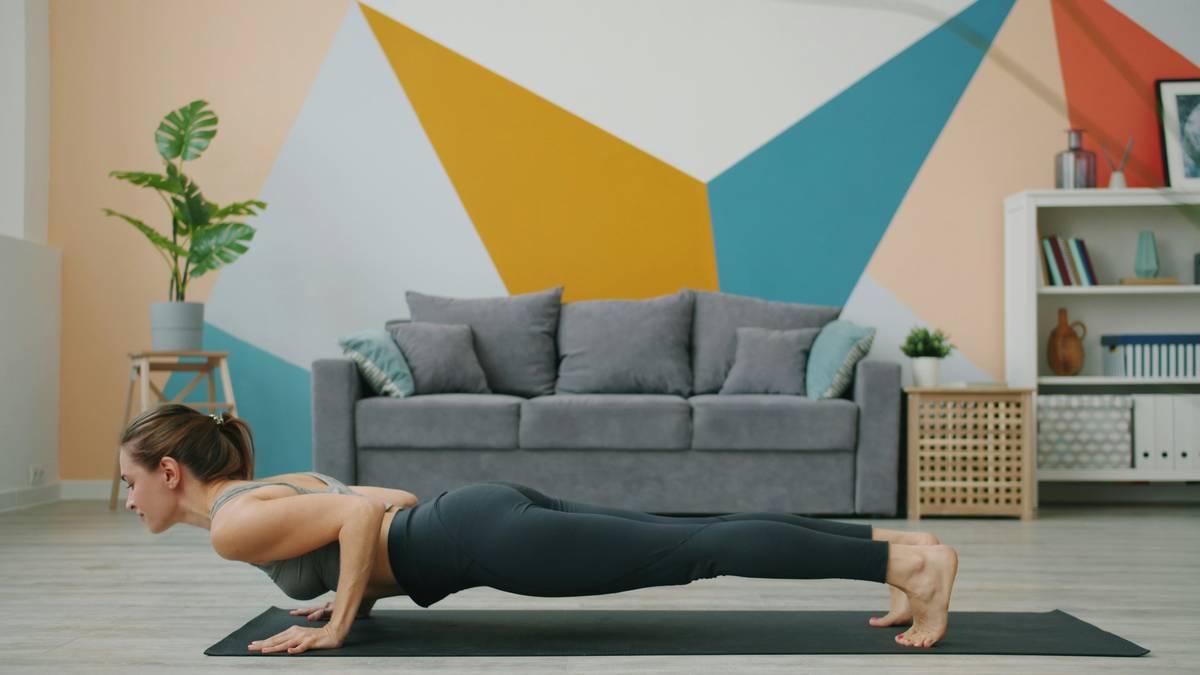
Consider this: A 2023 University of Alabama analysis found participants who combined resistance training with moderate cardio lost 3.2× more fat—and retained 94% more lean mass—than those doing cardio alone over 12 weeks. And here’s the kicker: resistance work doesn’t require dumbbells. It requires *intent*: slow eccentrics, full range, controlled pause at peak contraction. That’s where calisthenics shines. It’s not “just bodyweight”—it’s physics, leverage, and neuromuscular adaptation, packaged in sweat.
Your 4-Week Progressive Calisthenics Roadmap
Week 1: Foundation & Neural Prep
Goal: Master movement quality before adding load. Do each workout every other day (Mon/Wed/Fri). Rest 90 sec between sets.
- Push: Wall Push-Ups → Elevated Push-Ups (hands on sturdy chair) → 3×8
- Pull: Band-Assisted Rows (anchor band under door) → 3×10
- Legs: Glute Bridge Holds (30 sec × 4) + Bodyweight Squats (slow 4-sec descent) → 3×12
Week 2: Tension & Tempo Build
Add time-under-tension. Lower counts now matter more than reps.
- Push: Standard Push-Ups (4-sec down, 1-sec up) → 3×6
- Pull: Inverted Rows (feet on floor, body angled) → 3×8
- Core: Dead Bug + Plank Variations (forearm plank → elevated feet plank) → 3×30 sec
Week 3: Leverage Shift
Change geometry to increase resistance—no extra weight needed.
- Push: Pike Push-Ups (hips high, head toward floor) → 3×5
- Pull: Doorway Pull-Ups (use reinforced doorframe bar; start with negative-only pulls) → 3×3 negatives
- Legs: Pistol Squat Progressions (assisted w/ chair → slow partial → full) → 3×4/side
Week 4: Metabolic Integration
Pair exercises into circuits—keeping rest below 45 seconds to sustain heart rate *and* muscle tension.
- Circuit: 5 Pike Push-Ups + 8 Inverted Rows + 12 Jump Squats → rest 40 sec → repeat ×4
5 Science-Backed Best Practices You’re Probably Skipping
- Eat protein within 45 minutes post-workout—not to “build muscle fast,” but to blunt muscle catabolism. A 2023 meta-analysis in The American Journal of Clinical Nutrition shows 25–30g of complete protein post-resistance training improves net muscle protein balance by 41% versus placebo.
- Sleep ≥6.5 hours nightly—or your cortisol spikes 37%, directly impairing insulin sensitivity and fat mobilization. Data from the NIH’s Sleep and Cardiovascular Health Initiative holds firm.
- Track effort—not just reps. Use RPE (Rate of Perceived Exertion): if Week 2’s push-ups feel like a 6/10, Week 3 should land at 8/10. If not, adjust leverage, tempo, or volume.
- Walk 8,000+ steps daily—outside, not on a treadmill. Natural terrain variation engages stabilizers and increases energy expenditure by ~12% vs. flat pavement (per CDC Physical Activity Guidelines).
- Hydrate before thirst hits. Even 1.5% dehydration lowers metabolic rate by 3%. Keep water visible—even during Netflix breaks.
Real Progress: How Maya Lost 28 lbs in 14 Weeks (No Weights, No Coach)
Maya, 39, an ER nurse in Portland, started with prediabetes markers and joint pain she blamed on “aging.” She tried Peloton, then yoga DVDs, then intermittent fasting—all without consistent activity. Then she committed to this no-gym fat loss workout plan—plus 30g protein at breakfast, daily walks, and strict screen-free wind-downs.
No supplement stacks. No “detox teas.” Just consistency, progressive push-ups, and patience with her nervous system. By Week 6, clothes fit looser. By Week 10, her HbA1c dropped from 6.2% to 5.6%. At 14 weeks: down 28 lbs, blood pressure normalized, and—most quietly powerful—she signed up for her first 5K last month. Her secret? “I stopped chasing burn and started tracking strength. When my first unassisted pull-up happened, I knew my body wasn’t just losing fat—it was gaining trust.”
Frequently Asked Questions
- Can I do this no-gym fat loss workout plan without a pull-up bar?
- Absolutely—substitute inverted rows using a sturdy table or door anchor band. Pulling motion is non-negotiable for upper-back health and metabolic boost.
- How often should I change my no-gym fat loss workout plan?
- Every 3 weeks max. Neurological adaptation begins tapering results at Day 21—so refresh exercise selection, tempo, rest intervals, or superset pairings.
- Will I lose muscle mass while burning fat at home?
- Only if you skip progressive resistance and undershoot protein. Calisthenics builds lean tissue—even without hypertrophy goals—when tension is intelligently scaled.
- What’s the best time of day to train for maximum fat burn?
- Consistency beats chronobiology. Train when you can protect 30+ minutes daily—and guard that window like rent. Morning or evening matters far less than daily repetition.
- Can beginners safely follow this no-gym fat loss workout plan?
- Yes—every phase includes regressions (wall push-ups, assisted squats). The plan assumes zero equipment except floor space and mental readiness. Start where you are, not where you think you “should be.”
Let’s close with something I tell every client who doubts progress is possible without a gym: “Strength isn’t measured in plates stacked—but in how much gravity you can own, one rep at a time.” If you’re ready to build that kind of ownership—and want a custom tweak based on your joint mobility, schedule, or past injuries—we’d love to help. Reach out here. And if you’re curious who’s behind this approach, meet our team on the About Us page. All personal data we collect adheres strictly to our Privacy Policy.